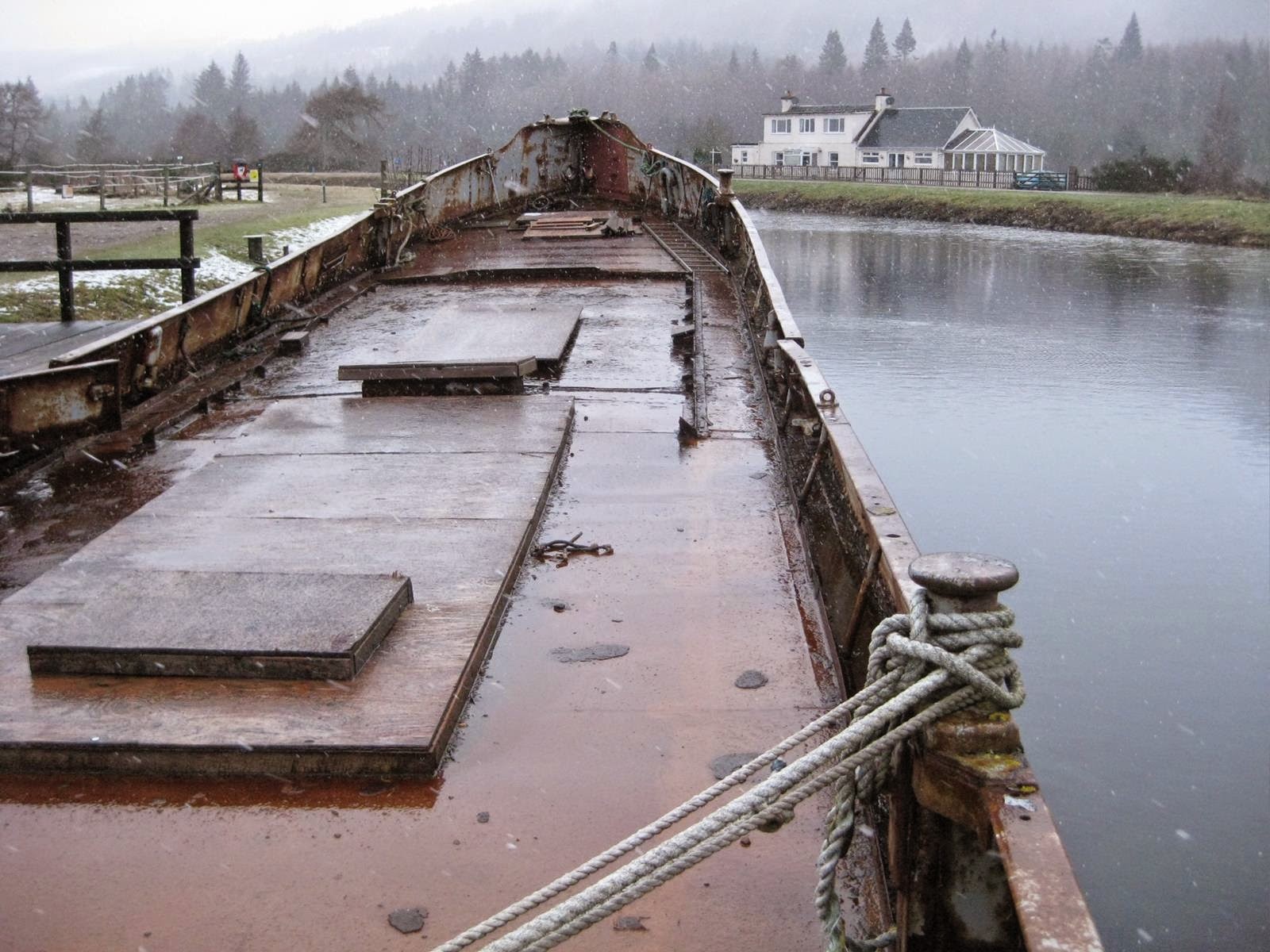
Showing posts with label design and lofting services. Show all posts

Saturday, 8 July 2017

Sail Training Ship MERCATOR

It has been some time since I have been able to spend anytime on the Blog or the website, but happy to let you all know about the latest developments on another old ship built at Leith.


New lease of life for the last ship built at the famous Ramage & Ferguson shipyard, at Leith, Scotland.

MERCATOR

Launched from the Leith Shipyard in December 1931 she was Ship No 269 according to the official shipbuilders list, she was an order from the Belgian Government for a 3 masted Barqentine for use as a sail training ship to be used by the Belgian Navy.

A barquentine is a sailing vessel with three or more masts; with a square rigged foremast and fore-and-aft rigged main, mizzen and any other masts.
Ideal for sail training along with the advantage of having a smaller crew than a full rigged ship, they are capable of very good performance before the wind, along with the ability to sail relatively close to the wind.

The MERCATOR is a very striking looking ship that required extensive work after a long period of lay-up at the port of Ostend.


MERCATOR seen here at her berth in Ostend, Belgium
(Photograph from the official Mercator website)


Her extensive re-fit was carried out in Ostend, Belgium by
IDP Shipyard  (Industries des pĂȘcheries)


They did the masts and the rigging a few years ago. While last year they carried out repairs, cleaning and panting of the hull along with a complete refit of her inside, with the cost of the whole operation costing around 3.4 million Euro. She is now back at her berth in Ostend open to the public, who as you will see in the video below came out in great numbers to welcome the old Leith built ship home.

Return of the Mercator to Ostend


If you happen to be in Ostend and wish to be shown around the ship and the surrounding area then we would recommend that you contact Joris Surmont, who is a very knowledgeable guide working in Ostend with very good English as well, you can find more details of his guided tours below, just click on the link to be taken right there.


You can also visit the official MERCATOR museum site here at


She is a testimony to the men who built her at Leith, now eighty five (85) years after she first entered the waters of the Firth of Fourth and still going strong, she is supported by a marvellous organisation along with many volunteers who will ensure she goes on for many more years.

Wednesday, 28 December 2016

Classic Ships - RMS AQUITANIA

As we approach the new year of 2017 we continue with a look back the way at some of the classic ships built not only at Leith but all over the world, as shipbuilding is a truly global industry now.
RMS AQUITANIA
It is debatable if we could feature a finer vessel in this classic ship series than the Liner that was to be known as "The Ship Beautiful" the RMS AQUITANIA built and launched at the John Brown Shipbuilding yard on the Clyde in Scotland.

If ever a ship deserved her given title it was the grand old AQUITANIA a vessel that was to serve through two world wars and survive is a real testament to the shipbuilding skills on the River Clyde.

The AQUITANIA on the stocks at John Browns at Clydebank almost ready to launch in 1913


RMS AQUITANIA was ordered by the Cunard Line and designed by Leonard Peskett. and built by John Brown & Company in Clydebank, Scotland.
She was launched on 21 April 1913 and sailed on her maiden voyage to New York on 30 May 1914.

The RMS AQUITANIA was the third in Cunard Line's "grand trio" of express liners, preceded by RMS Mauretania and RMS Lusitania, and was the last surviving four-funnelled ocean liner.

Widely considered one of the most attractive ships of her time, AQUITANIA earned the nickname "The Ship Beautiful".


In her 36 years of service, AQUITANIA survived military duty in both world wars and was returned to passenger service after both the First World War and the Second World War.

AQUITANIA held the record for the longest service career of any 20th-century express liner until broken by Queen Elizabeth 2 (QE2) in 2004, became the longest serving Cunard Line vessel.

You will find a great many more classic ships photographs at the website, the collection is being added to continuously, so why not check it out. 


Sunday, 6 November 2016

Good for Clyde Shipbuilding


Work on building eight Type 26 frigates at Clyde shipyards will start next summer, the defence secretary has said.
Michael Fallon said the date for cutting the first steel would help secure new investment and safeguard hundreds of skilled jobs until 2035.
He also announced that a contract for two new offshore patrol vessels would be signed shortly.
This will secure jobs before the Type 26 frigate work is fully under way, he said.
An £859m deal to build the ships on the Clyde was signed in February 2015.
But the project has been scaled back and hit by repeated delays, with concerns that jobs could be lost as a result.

'Value for money'

During a visit to the Govan area of Glasgow, Mr Fallon said: "Backed by Britain's rising defence budget, the Type 26 Programme will deliver a new generation of cutting-edge warships for our Royal Navy at best value for taxpayers.
"The UK government's commitment today will secure hundreds of high-skilled shipbuilding jobs on the Clyde for at least two decades and hundreds more in the supply chain across Britain."
The defence secretary also announced a £100m contract with the consortium MBDA to deliver the Sea Ceptor missile defence system for the ships.
Gary Smith of the GMB union said it was "fantastic news" for the upper Clyde shipyards - though he said the UK government had not delivered on all its promises.

He told the BBC's Good Morning Scotland programme: "We were told there was to going to be a 'frigate factory' built on the Clyde that would allow us to deliver ships more efficiently.
"It would perhaps have given us the facility to build ships that could be exported.
"And Michael Fallon in truth was dragged kicking and screaming to this announcement today after we exposed the fact that his government did plan to move some of the work originally planned for the Clyde, down south.
"But cutting through it all great, news for the workforce and great news for the economy in greater Glasgow as well."
The promise of new Royal Navy orders to secure the Clyde shipbuilding industry was made before the Scottish independence referendum in 2014.
The number of planned new frigates was later scaled back from 13 to eight, although the MoD retained the option to build five smaller and cheaper general-purpose vessels.
The Type 26 Global Combat Ships will be built by BAE Systems at the company's Glasgow yards in Govan and Scotstoun.
For more see the BBC website at http://www.bbc.co.uk/news/uk-scotland-37861162

Of course that is from the official press release which will not mention all the Government interference and dodging that has gone on over the past 18 months or so and the word on the street is that they even intended to shift some of the work if not all of it down South, but nothing new in that, it would appear that for now at least the shipbuilders (the few that remain) will have work for the foreseeable future which has to be regarded as a good thing, although the number of ships has been cut from lucky "13" down to eight this is still a very large project which now has the few remaining yards around Britain all crying out for their bit of the pie.

This may or not come about with a release of news as it gets closer to election time that the 5 remaining smaller ships will indeed be built elsewhere, for now it is looking good for shipbuilding in the two remaining main shipyards on a river that could at one time boast of close to Fifty (50) shipyards on this relitivly small stretch of water.  

Wednesday, 19 October 2016

Classic Ships - SOUTHERN CROSS

we continue with the series on "Classic Ships" and you can see many more of these photographs at the www.leithshipyards.com

We start off her with one of the many fine ships built in the Dundee Caledon shipyard a yard which was to join with the Henry Robb Shipyard for a while and the company was renamed as Robb Caledon Shipbuilders & Engineers Ltd, before the Caledon Shipyard was closed down in 1982 and the Leith yard reverted back to the Henry Robb name, before it too was closed down in 1984

The SS BAROSSA was launched in 1938 built at the Caledon yard of Dundee, Scotland


The picture below is a ship that was built and launched in a shipyard that was almost directly opposite the Leith Shipyard of henry Robb, The Burntisland Shipyard also built many fine ships over the years, they had the capacity to build larger vessels than the Leith Shipyard, and during World War II they did indeed build many Escort Aircraft Carriers.


The WARRINGA was built at the Burntisland shipyards, Scotland in 1955

Last but by no means least the old Liner SOUTHER CROSS which was built by Harland & Wolff in Belfast Northern Ireland

 The SOUTHERN CROSS was launched in 1954 and completed in 1955


Tuesday, 18 October 2016

Classic Ships

We have now started a new feature on the Blog to be called Classic Ships which will feature Classic Ships from around the world, as many ships were in fact built at Leith, a great many more were built all around the world, so we have decided to honour them in our own small way, no bloody "Box Ships" here, they will all be ships that had form and shape to them.

The first ones and they will be in no particular order are a ship from Italy and another built in Denmark, all ships that look like ships.


ACADIA


She was built in Denmark by Flensburger and launched in 1938


ACHILLEUS

She was built in Italy by Ansaldo and launched in 1952


 Look out for many more in the new "Classic Ship" series


Wednesday, 14 October 2015

SA WOLRAAD WOLTEMADE

We could not resist showing this great photograph taken by D. Shackleton and sent into the Leith Shipyards website by L. Pollard.
 Same photographer took the almost identical shot of her sister ship the SA JOHN ROSS which had been built at a local South African shipyard and was launched a bit after the Leith built SA WOLRAAD WOLTEMADE which just looked right.


SA WOLRAAD WOLTEMADE Z-TUG

SA JOHN ROSS Z-TUG
They show the two mighty ships arriving at Cape Town for the first time ready to go about there work.

Don’t know about you but I know which ship looks the better and leave you to choose your own preferred picture.


Sunday, 16 August 2015

Aircraft carrier section leaves Clyde shipyard

Lowe Block 04 Prince of Wales


A massive 11,200-tonne section of an aircraft carrier built on the Clyde has begun its journey around the coast of Scotland to Rosyth for final assembly.
The section, called Lower Block 04, is the largest part of the aircraft carrier HMS Prince of Wales.
It is 20 metres high, 80 metres long and comprises a fifth of the overall vessel.
We like to bring you news of new and old shipbuilding matters, for more on this story and some very good photographs please see the rest on the BBC website.


Sunday, 2 August 2015

Largest aircraft carrier section floated

Another of the many "Super Blocks" which once joined together will form the second of the Royal Navies new "Aircraft Carrier Force" was successfully floated out at Govan Shipyard in Glasgow last week.
Block 04 of the CVF "Prince of Wales" in Glasgow


The interesting thing for me in the photograph above from the BBC/Scotland website is the massive "Aft" poppet arrangement, built under the after lower hull to support the huge weight of the hull until she is joined together and floats.

 An 11,200 tonne aircraft carrier section has taken to the water for the first time on the Clyde.
Lower Block 04 is the largest hull section of HMS Prince of Wales.
For more from the BBC website see here

Tuesday, 14 July 2015

BRITISH COAST VIDEO

The MV BRITISH COAST Maiden voyage


The MV BRITISH COAST Model on her maiden voyage seen here in the U-Tube Video.

http://youtu.be/ydxOHD289nU

For more photographs visit the website at www.leithshipyards.com


The BRITISH COAST Sails once more

The model of the Leith Built MV BRITISH COAST has now been put to the test in the water by her maker Steve, and she passed with flying colours.


Steve Heward seen here guiding his model of the Leith Built MV BRITISH COAST
We will have lots more photographs and video on the website soon at www.leithshipyards.com 

Monday, 2 March 2015

SCOT II Photo's March 2015

This is going to be one hell of a restoration project and we look for help worldwide.


Can we do it (to quote someone else! YES WE CAN!
All help and enquiries most welcome, soon there will be a website where you can join the friends of the Save the SCOT II Society.

Saturday, 14 February 2015

ST HELEN Ship No 535-Builders Plate

We feature the builders plate from the ST HELEN seen in this photograph sent in by senior steward Anni on the ST HELEN just a couple of weeks ago in the Solent.
She was of course built when the shipyard had reverted back to its original name of Henry Robb Ltd although still a part of the "Quango" that was "British Shipbuilders" at the time.

Quango is an acronym used especially in the United Kingdom and the Republic of Ireland. Quangos are arms-length bodies funded by government departments but not run by them. They are given power and paid for by government departments

Sign of the times that the builders plate was made from stainless steel gone was the traditional "Brass builders plate"

Henry Robb Ltd Shipbuilders, Leith

Tuesday, 30 September 2014

Old Firm - New Order


Ferguson shipyard secures ferry contract


Some good shipbuilding news to report at last from the recently purchased Ferguson Yard on the lower Clyde in Scotland, news that will keep Scotland’s last commercial shipyard going and with the promise of even more orders things are beginning to look up for the small band of Shipbuilders left on the Lower Clyde.

Book with confidence thanks to the Best Price Guarantee from Expedia.com
 

The Ferguson shipyard in Port Glasgow has won its first ferry building contract since being rescued from closure.

Clyde Blowers Capital - owned by the billionaire Jim McColl - bought the yard earlier this month after it went into administration.

It has now secured a £12m contract from the Scottish government to build a third hybrid ferry for CalMac.

More details of the deal will be released later this week.

The yard has previously built two other hybrid ferries - the MV Hallaig and MV Lochinvar - for CalMac.

The new vessel, which will be able to accommodate 150 passengers and 23 cars or two HGVs, is expected to be launched in the spring of 2016, before entering service in the autumn of the same year.

It will use a low carbon hybrid system that combines traditional diesel power with electric battery power and will lead to a reduction in fossil fuel consumption and carbon emissions.

For more on the story see the BBC news website


Friday, 8 August 2014

The Irish Lights Ship ALBATROSS


Earn More in One Day Than a Professional Athlete.
Looks like she was or still is up for sale, although she may even have been scraped by the time of writing.
The LS ALBATROSS sits at a quayside somewhere in Kent her fate at this time unknown
Photo credit from shipspotters website and if the owner contacts us we shall credit the photograph


Takes a real will and very deep pockets to take on a large project such as converting or even partially restoring such a large ship

Check out this link to see the ship in better times when she was used to train Irish Sea Cadets


Tuesday, 8 July 2014

HMS DIANTHUS Flower Class Corvette


HMS DIANTHUS


Flower Class Corvettes Flower Class Corvettes
The ‘ShipCraft’ series provides in-depth information about building and modifying model kits of famous warship types. Lavishly illustrated, each book takes the modeller through a brief history of the subject class, highlighting differences between sister-ships and changes in their appearance over their careers. This includes paint schemes and camouflage, featuring colour profiles and highly-detailed line drawings and scale plans. The modelling section reviews the strengths and weaknesses of available kits, lists commercial accessory sets for super-detailing of the ships, and provides hints on modifying and improving the basic kit. This is followed by an extensive photographic gallery of selected high-quality models in a variety of scales, and the book concludes with a section on research references - books, monographs, large-scale plans and relevant websites.This volume includes all the features of the regular series but the extent has been doubled to include far more detailed drawings of a class of ship that was built in huge numbers and in many variations. Mainstay of the Atlantic battle against the U-boats, Flower class corvettes were used by the British, Canadian, French and US Navies.


Tax Disc style ships crest

HMS DIANTHUS Car Window Sticker


For anyone interested they would make a nice present to be shown on your car and help keep the name and memory of this famous old Flower class Corvette built at the Leith Shipyards of Henry Robb Ltd in Scotland and launched in 1940


For more info contact the website and we shall put you in touch with the supplier.
 

Please note that the supply or make of these stickers has nothing to do with the website we just happen to think they may be of interest so showing them here on the Blog.


 Battle of the Atlantic

Thursday, 5 June 2014

D-Day 70 years on.


June 6th 1944 – The D-Day Landings


Operation Neptune

Was the code name given to the naval group’s task on this momentous day in 1944. As the remaining survivors of this epic day gather in the U.K. and over in France we salute them.

Operation Neptune
 

The protection of NEPTUNE from enemy counter action was essential to the success of the operation. Allied forces were most vulnerable to enemy counter action when they were embarked and at sea. Some 6,900 allied vessels, carrying approximately nine army divisions with full combat equipment, were at sea at one time. These ships were formed into around 75 convoys and groups, passing along narrow coastal lanes, moving across the channel through the narrow mine-swept channels of the allotted areas for the convoys or crowded into the congested confines of the assault area.

You will find many more books and information on this day and so many more at our Maritime Library at Ships and the Sea

Had the enemy not been deterred by a comprehensive program of defence capability in the form of escort ships and of course command of the air, this enormous armada would have presented to enemy air and naval forces a very profitable target.

The largest assembly of Ships and amphibious forces ever seen were to retake Europe from the clutches of the Nazi.

Operation Neptune Operation Neptune
Long-awaited, the Normandy landings were the largest amphibious operation in history. Success was achieved by the advent of specialised landing craft, first seen in the landings in North Africa, heavy naval firepower and the creatiojn of two artificial harbours, each the size of the port of Dover, and an underwater pipeline. Operation Neptune: The Prelude to D-Day tells the story of this incredible feat using eye-witness accounts of the landings and the breaching of Hitler's famed 'Atlantic Wall'. David Wragg explores the earlier Allied and Axis experiences with amphibious operations and the planning for Neptune and Overlord. Revealing the naval support neede once the armies were ashore and before continental ports could be captured and cleared of mines, with operations such as minesweeping off the Normandy coast which led to one of the worst 'friendly fire' incidents of the war. The is the must-read book to understand what made D-Day possible.


And of course along with the many ships involved where some that were built at the Leith Shipyards of Henry Robb Ltd.
Without the amazing job done by the mine-sweepers there could have been no landing and one of the lead ships was the minesweeper HMS SIDMOUTH Ship No 310 built at the Leith Shipyards of Henry Robb Ltd, yet another of the small ship Navy.
 
The ships crest of HMS SIDMOUTH a Bangor Class Minesweeper built at Leith

Ships such as HMS PINK Ship No 318 amongst many as this battle did not just last for one day but stretched out for something like 6 weeks before the establishment of forces in Normandy had the capability to make the break out of the Normandy region on the roads that lead into the heart of Germany.

HMS PINK the final Flower Class Corvette built at the Leith Shipyards of Henry Robb Ltd
as Ship No 318
Damaged by U988 27th-29th July 1944 and was regarded as a constuctive total loss.
The Uboat was sunk 2 days later

Not only warships but also some of the Bustler Class tugs were involved with the gigantic task of towing the huge mulberry harbours over the channel and into position to enable the supply of the ground forces, along with the massive drums that carried the oil pipeline to the French Coast.

The Bustler Class Tugs such as BUSTLER and SAMSONIA seen here after the war had there part to play in the invasion plans to re-take Europe in 1944
 
Operation Overlord
Operation Overlord, the Allied codename for the invasion of Normandy, involved more than 150,000 men and 6,939 ships.  It consisted of American, British, Canadian, Polish, and Free French Armies under command of General Eisenhower, the Supreme Commander of the Allied Expeditionary Force (the choice of Eisenhower was officially made by President Roosevelt in December 1943, and agreed upon by the British).
The Deputy Supreme Commander of the invasion was British Air Chief Marshal Arthur W. Tedder, who had been the commander of the Allied Air Forces in the Mediterranean.  While British Admiral Bertram H. Ramsay, was appointed naval commander.  He had conducted the evacuation at Dunkirk and also planned the Torch landing in North Africa.  British Air Chief Marshal Trafford L. Leigh-Mallory was appointed as commander of the air forces.

Bernard Montgomery was chosen as the ground forces' commander. 

Sunday, 13 March 2011

Photo Updates

Lots of new photographs now on the main website of the http://www.leithshipyards.com/ pages
For the latest pictures in the shipbuildng category click through to see.
For the latest update to the famous ships category click through to see. You will also find a bit of video and a famous song as well.

Shipbuilders Plate from the SCOT II (Ship No 184)

Sunday, 27 February 2011

Update-Naval Ships

Hi,
Latest update on the http://www.leithshipyards.com/ are some photographs in the Naval Ships built in Leith page, showing some of the many non warships built in the yard.Just click on the highlighted words to be taken right there.
Also some amazing pictures of a real tough little Mississippi Tugboat.

Saturday, 12 February 2011

Favourite ROBB SHIPS-3

RFA BUSTLER and RFA SAMSONIA
(Photograph is courtesy of the Plymouth RFA Assocciation)
The following completes the list of favourite Robb ships compiled while doing the research and actually working on some of the ships.

While any list is purely subjective this is my one and will show my top 30 Robb built Ships, with the final  10 shown below.

If you click on the ships name it will take you to more on the ships at the website. (Remember this website is ongoing)

Should you have a favourite list or wish to add to this existing list then send it in to the blog or the new website at http://www.leithshipyards.com/


21. HMRT BUSTLER Ocean Rescue Tug

22. HMS DERG River Class Frigate (In Tokyo Bay at Jap Surrender)

23. M.V.POOLTA (Last of the U.S.S.Co ships for New Zealand)

24. MSC ROVER (last of the Manchester ship canal Tugs)

25. HMS LOCH KATRINE (New Zealand Navy ship ROTOITI)

26. M.V.ARCADIAN (Ellerman Wilson Line Cargo Ship)

27. HMS CARDIGAN BAY Frigate of the Bay Class

28. WESTMERE (First ship built)

29. HMS BASSET (First in the Dog Class armed trawlers)

30. M.V.LIGAR BAY (Cement ship for New Zealand)


Friday, 28 January 2011

Favourite ROBB SHIPS-2

Continuing the list of favourite Robb ships compiled while doing the research and actually working on some of the ships.


While any list is purely subjective this is my one and will show my top 30 Robb built Ships, with the next 10 from number 11 to 20 shown below.

If you click on the ships name it will take you to more on the ships at the website. (Remember this website is ongoing)

Should you have a favourite list or wish to add to this existing list then send it in to the blog or the new website at www.leithshipyards.com

HMS LOTUS Ship No 317


11. LLOYDSMAN Ocean Salvage Tug
12. HMS LOTUS Flower Class Corvette
13. MV RAPALLO Cargo Ship
14. HEDWIN Grab Hopper Dredger
15. HMCS HESPELER Castle Class Corvette
16. ST HELEN Passenger/Vehicle Ferry
17. WANGANUI Grab Hopper Dredger
18. HMS WINDRUSH River Class Frigate
19. HMRT TURMOIL Navy Salvage Tug